

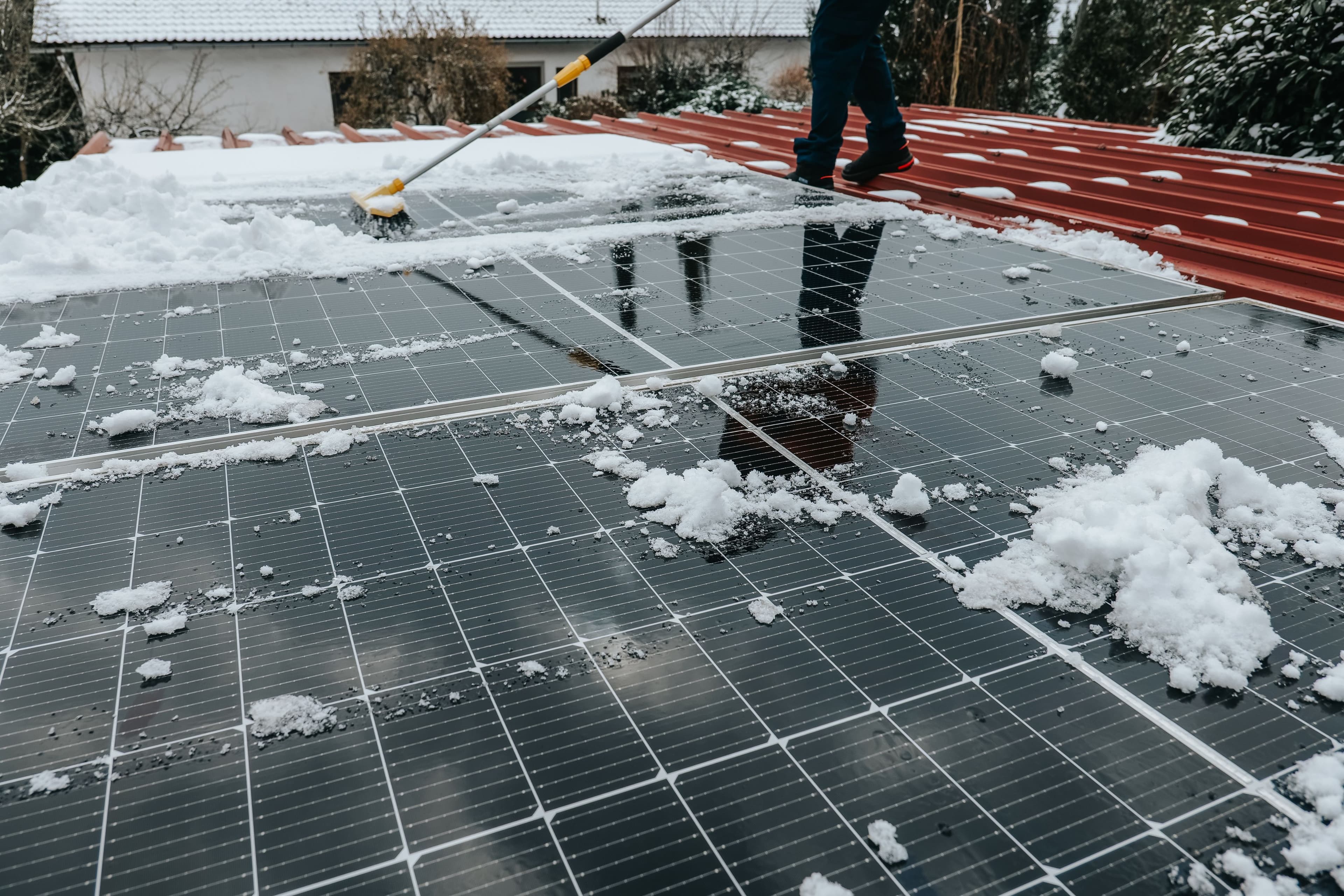
How to Evaluate Solar Racking for Wind and Snow

When designing or installing a rooftop solar array, your racking system is all that stands between a secure system and a costly storm failure. High winds can rip modules off roofs, while heavy snow can bend rails and stress roof attachment connections.
Here’s a bite-sized breakdown of what you need to evaluate before choosing a racking system for tough winter weather and high-wind environments.
Quick Summary: The Big 3 Evaluation Factors
- Local Wind Speeds & Roof Zones: High-turbulence roof corners require tighter attachment spacing than the middle of the roof.
- Ground Snow Load vs. Drift: Snow accumulation near parapets or obstacles creates localized pressure points up to 4x heavier than open roof space.
- Manufacturer Span Tables: Always verify rail spans and mount spacing against third-party tested engineering documentation and span tables.
1. Calculating Wind Uplift & Pressure
Wind doesn't just push down on solar panels—it acts like an airplane wing, creating intense suction (uplift) underneath the array.
- Check the Roof Zone: Wind turbulence isn't uniform. Roof edges and corners (Zones 2 and 3) experience far more uplift than the center (Zone 1). Your racking layout should accommodate closer mount spacing near edges.
- Look at the Tilt: Higher tilt angles catch more wind, demanding higher-strength rails and heavier-duty roof attachments.
2. Snow Loads: It's More Than Just Accumulation
Snow adds massive compressive weight to racking, but sliding snow and drifting create the biggest structural challenges.
- Uniform vs. Drift Snow: Snow drifts against parapets, chimneys, and dormers. Make sure your racking can handle the extra local load in those spots.
- Sliding Snow Shear: As modules warm up, snow sheds rapidly. Bottom-row mounts and module clamps must resist the downward pull of heavy sliding sheets.
- Rail Deflection: Weak rails sag under heavy snow loads, which can cause module glass to flex or crack.
3. Key Features to Look For in Solar Racking
When comparing racking manufacturers, look for these structural specifications:
| Feature | What to Look For | Why It Matters |
|---|---|---|
| Materials | 6000-Series Aluminum & Stainless Steel | Prevents fatigue, rust, and extreme cold cracking. |
| Wind Rating | Rated up to 180–190 mph | Essential for coastal and hurricane-prone regions. |
| Snow Rating | Rated up to 90–120 psf | Handles heavy snow without rail sag. |
| Testing | UL 2703 + Validated Span Tables | Ensures structural compliance and fast AHJ permit approvals. |
SnapNrack: Built By Installers, For Installers
Whether you’re dealing with high wind zones or severe snow, SnapNrack systems are engineered to streamline installation while delivering maximum structural integrity:
- Ultra Rail System: Designed for long span capabilities, handling up to 190 mph winds and 120 psf snow loads.
- TopSpeed® Universal System: Offers rapid railless roof mounting with integrated SpeedSeal™ Technology, rated for up to 180 mph wind and 90 psf snow.
Planning your next project? Use the SnapNrack design tool, Blueprint, to quickly build your array layout and generate a complete Bill of Materials (BOM). Need site-specific PE stamps for permitting? SnapNrack works directly with trusted engineering partners to help you secure stamped structural documentation.
Dakota Dominguez
Sr. Marketing Manager